

As couples begin thinking about separation, questions about money and assets often come up. One concern many people have is whether they can withdraw or empty a bank account before filing for divorce. While it may be tempting to do so, especially during a difficult breakup, there are important legal and practical considerations to keep in mind.
The Golden Rule: Full Disclosure
Before looking at whether you can empty a bank account before a divorce, it’s important to understand one of the key principles of the divorce process: full financial disclosure.
During a divorce, both spouses are generally required to provide complete and accurate information about their finances, including assets, debts, income, and expenses. This information helps the court, or the parties themselves, reach a fair resolution regarding property division and other financial matters.
Because of these disclosure requirements, attempting to withdraw or hide money from a bank account can create serious problems. Failing to disclose assets may be viewed negatively by the court and could result in legal consequences, depending on the circumstances and the laws in your jurisdiction.
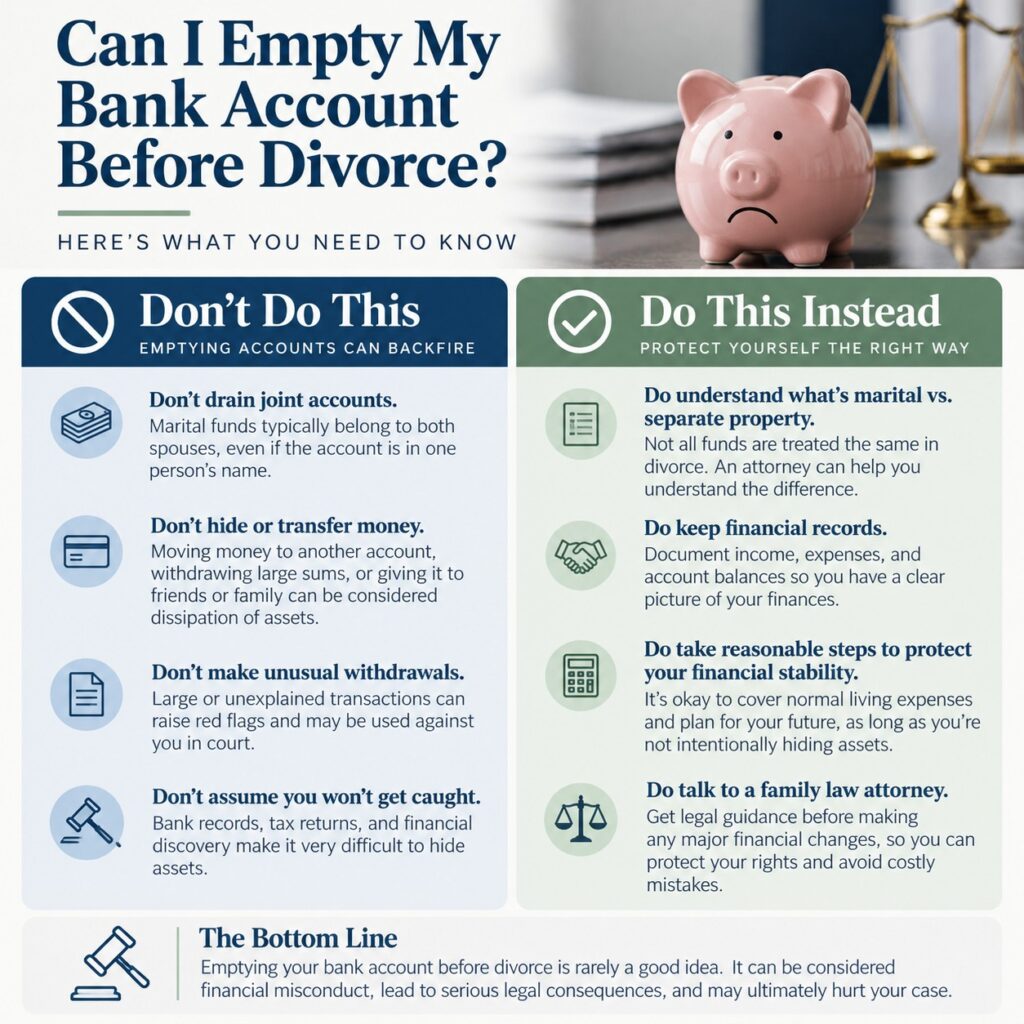
Consequences of Emptying a Bank Account
Trying to withdraw or transfer large amounts of money before a divorce can have consequences that extend beyond the bank account itself.
- Legal Consequences: Courts generally expect both spouses to be open and honest about their finances during a divorce. If a judge believes that one spouse intentionally moved, hid, or depleted assets to keep them out of the divorce process, there may be legal repercussions. Depending on the circumstances, this could include financial penalties and decisions that favor the other spouse when assets are divided.
- Impact on Property Division: The goal of most divorce settlements is to divide marital assets fairly. Actions that appear designed to reduce the amount of money available for division can complicate negotiations and court proceedings. In some cases, a spouse who improperly withdraws or spends funds may be required to account for that money or reimburse the other party.
- Damage to Trust and Credibility: Credibility can play an important role during a divorce. When one spouse takes actions that appear secretive or misleading, it can create additional conflict and make it more difficult to resolve issues cooperatively. It may also affect how the court views that person’s testimony and financial disclosures throughout the case.
Are There Any Exceptions?
In general, withdrawing or transferring large amounts of money before a divorce is not a good idea without first getting legal guidance. However, there are situations where accessing funds may be appropriate or even necessary. Every divorce is different, and the rules can vary depending on your circumstances and the laws in your state.
Some common examples include:
- By Agreement: While parties work to resolve issues remaining between them, but before a Divorce matter is completed, it is possible for them to agree to a division or usage of a particular marital asset. This is best done in cooperation with an attorney so that any agreement between them is enforceable.
- Complying With Court Orders: Courts sometimes issue temporary financial orders during a divorce. These orders may limit withdrawals, require certain payments to be made, or otherwise dictate how accounts can be used. It is important to follow any court order that applies to your case.
- Using Separate Accounts: If you have an account that is solely in your name, you may have more flexibility in how you use those funds. However, that does not automatically mean the account is excluded from the divorce. Before making significant withdrawals or transfers, it is wise to discuss the situation with your attorney.
The Value of Open Communication
Divorce can bring a great deal of uncertainty, especially when finances are involved. While it may be tempting to take immediate action to protect your money, open and honest communication is often the better approach.
When possible, discussing financial concerns, household expenses, and the division of assets with your spouse can help reduce misunderstandings and avoid unnecessary disputes. If direct conversations are difficult, mediation or guidance from experienced attorneys may help both parties work toward a fair resolution.
Conclusion
In most cases, emptying a bank account before a divorce is not advisable. Doing so can raise legal concerns, complicate property division, impact credibility, and create additional challenges during an already difficult process.
If you have concerns about protecting your finances or accessing funds during a divorce, it is important to seek legal guidance before taking action. An experienced divorce attorney can help you understand your rights and obligations, ensure you comply with applicable laws and court orders, and work toward a solution that protects your interests.